Best PLC Training Programs 2026: How to Compare
Compare PLC training by verified curriculum, lab access, instructor support, credential value, total cost, and a reproducible skills test—not marketing claims.
A PLC training program is worth shortlisting when it matches the target equipment and job tasks, provides supervised executable practice, assesses each learner, and leaves reproducible skills evidence. For a plant team, compare the curriculum against the installed base and maintenance failure modes. For an individual, compare it against real job postings and the software/hardware you can legally access.
This page owns the program-level decision: manufacturer pathways, college or apprenticeship programs, instructor-led labs, credentials and team procurement. For self-paced course subscriptions and individual online providers, use the online PLC course comparison. For zero-cost resources, use the verified free PLC course list.
This framework compares program types and named provider paths using evidence a buyer can verify before enrollment. It does not claim measured employment outcomes, salary uplift or universal provider rankings.
Want the learning sequence before the comparison? Use the hands-on PLC training guide for the fundamentals-to-troubleshooting path, browser practice loop, and clear simulator limitations.
Download: use the PLC course and training comparison worksheet to capture versions, labs, feedback, assessment, credentials, access limits and complete cost from the live provider proposal.
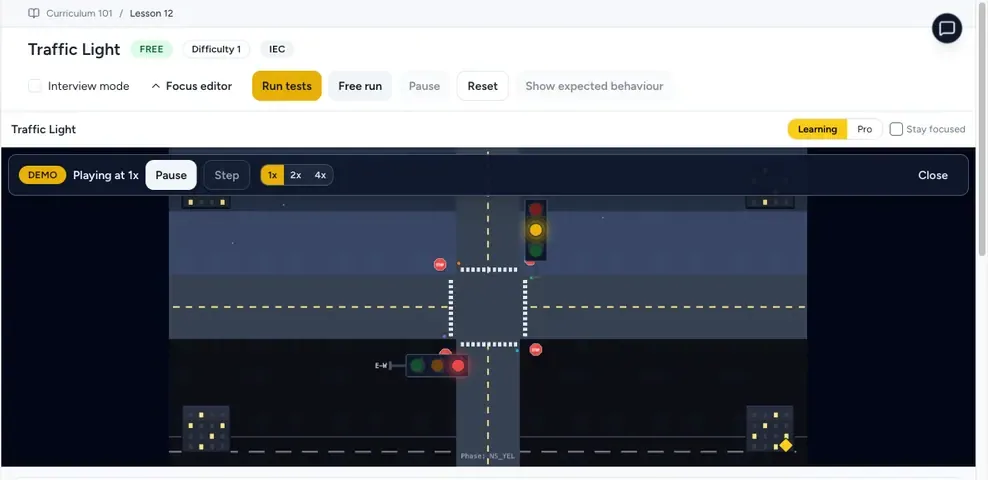
Hands-on practice companion — PLC Simulation Software. For learners whose selected course is strong on explanation but light on executable practice, PLC Simulation Software adds browser-based lessons, simulated I/O, and repeatable logic scenarios. Its versioned product facts document the free-account policy, current lesson allowance, maintained dialect list, scenario-access caveat, and limitations. Editorial decision: use it as a practice layer alongside a course or supervised lab—not as manufacturer certification, a production controller, vendor-firmware emulation, or a substitute for testing on target hardware. Ownership disclosure: plcprogramming.io and PLC Simulation Software are operated by the same publisher.
The industrial automation sector continues experiencing unprecedented growth, with PLC programming skills among the most in-demand technical competencies. Making the right training choice now positions you for long-term success in this expanding field.
Table of Contents
- Training Program Evaluation Methodology
- Top Manufacturer Training Programs
- Leading Online PLC Training Academies
- University and Community College Programs
- Specialized Industry Training Centers
- Professional Certification Programs
- Cost-Benefit Analysis by Program Type
- Training Program Rankings and Recommendations
- Career Outcomes and Success Metrics
- How to Choose the Right Program
- Frequently Asked Questions
Training Program Evaluation Methodology
This editorial framework compares PLC training across the factors a prospective learner can verify before paying. The weights are a decision aid, not measured industry outcome data; adjust them to your role and target equipment.
Evaluation Criteria Framework
Content Quality & Comprehensiveness (25%)
- Curriculum depth covering fundamental through advanced concepts
- Multiple PLC platform coverage (Allen Bradley, Siemens, Schneider Electric)
- Real-world project integration and practical applications
- Industry-specific applications and case studies
- Current technology trends and emerging automation concepts
Instructor Expertise & Support (20%)
- Industry experience and technical credentials
- Teaching effectiveness and student feedback ratings
- Availability for questions and ongoing support
- Professional certifications and industry recognition
- Response time and quality of technical assistance
Practical Learning Opportunities (20%)
- Hands-on laboratory access and equipment availability
- Simulation software quality and realism
- Project-based learning and portfolio development
- Hardware accessibility and platform variety
- Real-world problem-solving scenarios
Career Value & Outcomes (15%)
- Published graduate outcomes with cohort, date, denominator, and collection method
- Industry recognition and employer acceptance
- Certification pathways and professional credentials
- Job placement assistance and career services
- Alumni network strength and networking opportunities
Cost Effectiveness & Total Cost (10%)
- Total program costs including hidden fees
- Time investment requirements and completion rates
- Employer reimbursement, opportunity cost, and the skills the course can demonstrate
- Value compared to alternative training options
- Financial aid and payment plan availability
Learning Format & Flexibility (10%)
- Schedule accommodation for working professionals
- Multiple delivery formats (online, classroom, hybrid)
- Self-paced versus instructor-led options
- Mobile access and learning platform quality
- Makeup sessions and flexible completion policies
Research Methodology
This page does not claim a proprietary graduate survey, employer-interview panel, or audited placement dataset. Treat provider-supplied ratings, placement rates, salary gains, and testimonials as unverified unless the provider publishes:
- the reporting period and eligible cohort;
- the number invited and number responding;
- whether non-completers are included;
- the outcome definition and evidence collected;
- median as well as distribution, not only selected success stories;
- the organization that performed or audited the analysis.
For each candidate, request the syllabus, software/version list, lab inventory, instructor identity, sample lesson, assessment rubric, refund terms, and complete quote. Then run the practical skills test later in this guide.
Top Manufacturer Training Programs
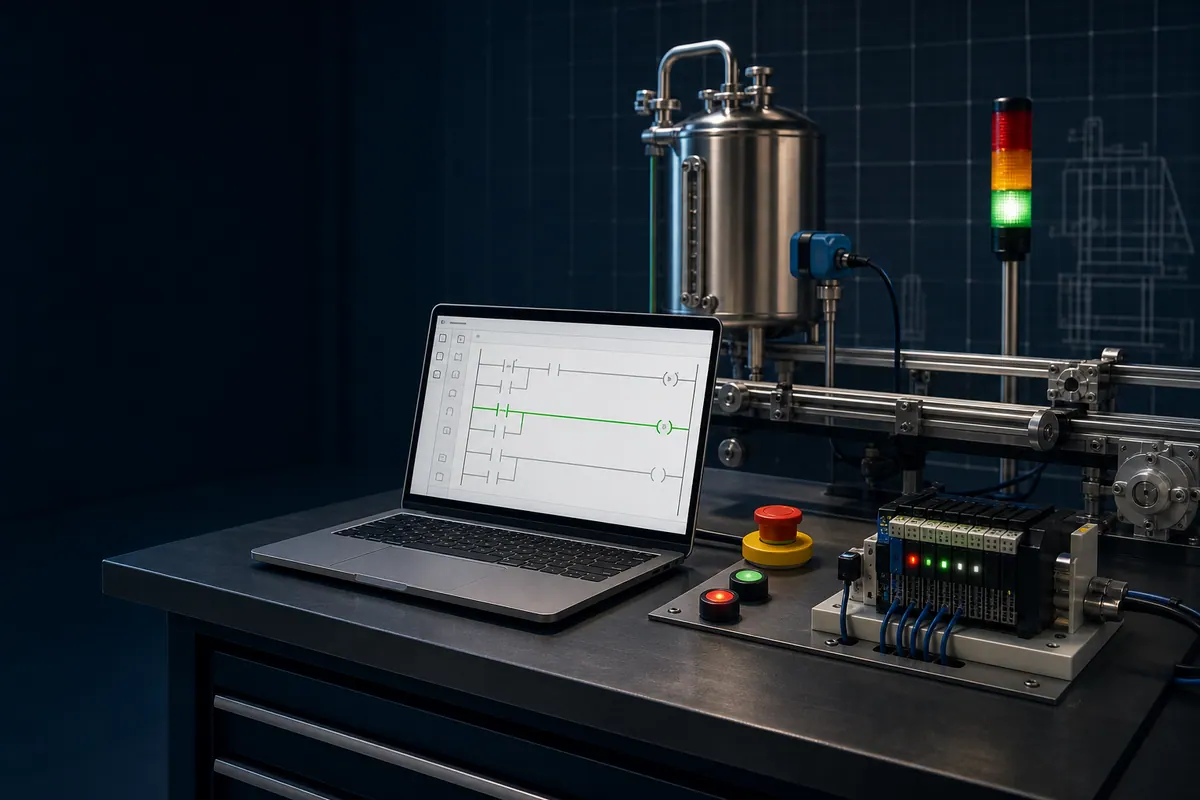
Manufacturer-sponsored training is the most direct route to version-specific platform workflows. Verify that the course uses the controller family, firmware, engineering-software version, and lab format you actually need.
Allen Bradley/Rockwell Automation Training
Start with Rockwell Automation's current regional training catalog. Availability, course codes, delivery format, prerequisites, and price vary by country and date.
Program Highlights:
- Studio 5000 and Logix programming fundamentals
- FactoryTalk View development
- Motion configuration and diagnostics
- GuardLogix safety courses with explicit prerequisites
Learning Delivery Options:
- Instructor-led classroom training with real hardware
- Virtual instructor-led training with remote lab access
- Custom on-site training for organizational teams
- Self-paced eLearning modules with simulation software
- Blended programs combining multiple delivery methods
Credential check:
- Distinguish a course-completion certificate from a proctored certification.
- Record the credential owner, assessment method, expiration, and renewal rules.
- Ask whether lab work is individually assessed and can be shown in a portfolio.
- Do not infer employment or salary outcomes from course completion alone.
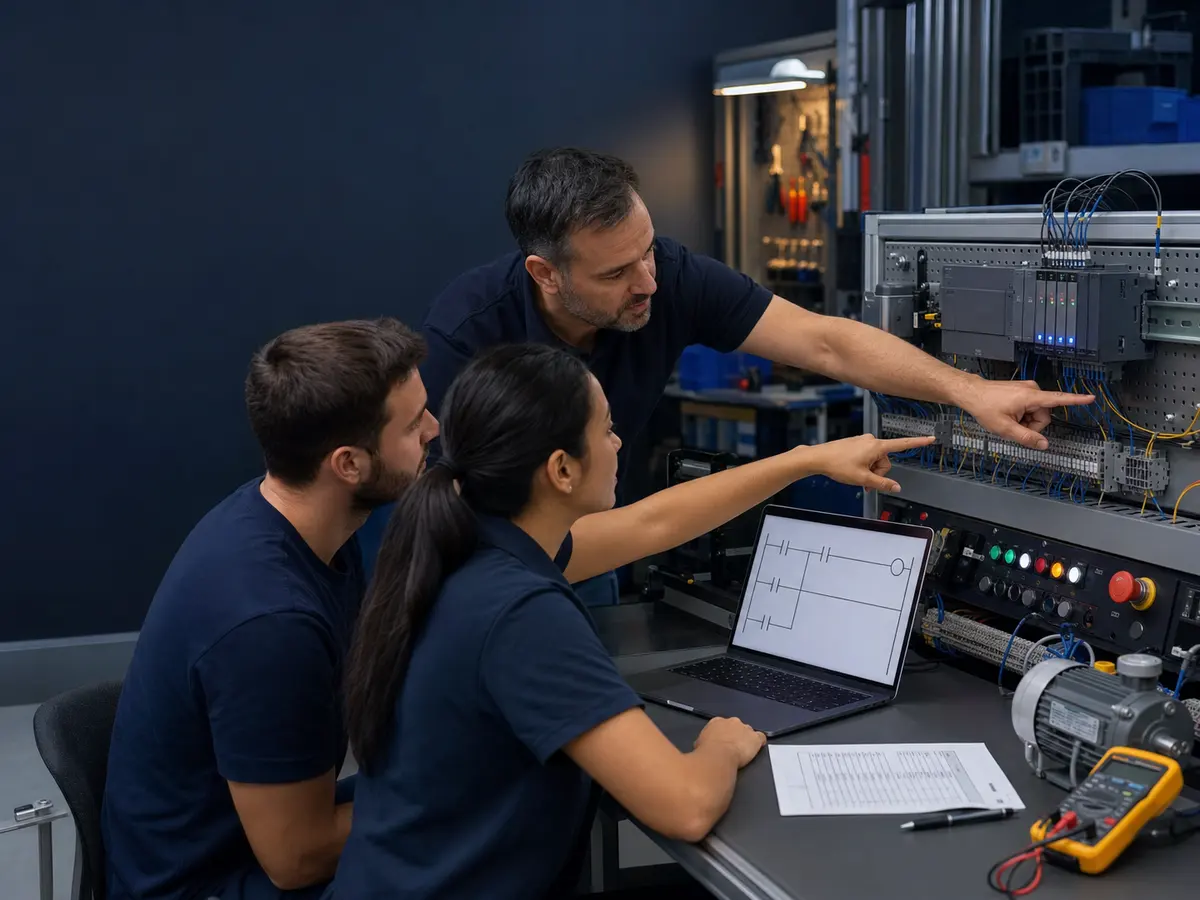
Best For: Professionals working with Allen Bradley systems, career advancement in Rockwell-centric environments, engineers requiring official manufacturer certification, and organizations investing in standardized team training.
Investment check: Obtain a written quote for tuition, travel, software, exam fees, time away from work, retakes, and support. Compare it with the number of supervised lab hours and the exact job requirements you are targeting.
Siemens Digital Industries Training
Use the current Siemens SITRAIN catalog for the learner's region. Course scope and availability differ, so compare course codes rather than relying on a generic global ranking.
Core Training Portfolio:
- TIA Portal and SIMATIC programming fundamentals
- Advanced diagnostics and program organization
- SIMATIC Safety courses with stated prerequisites
- PROFINET commissioning and diagnostics
Delivery checks:
- course language, timezone, and regional catalog;
- instructor-led, virtual, self-paced, or blended format;
- physical, remote, simulated, or demonstration-only lab access;
- controller and TIA Portal versions used;
- assessment and retake rules.
Digital Learning Platform:
- Interactive online modules with 3D simulations
- Virtual reality training for complex procedures
- Mobile learning app for on-the-go study
- Progress tracking and competency validation
- Integration with professional development planning
Industry Recognition:
- Globally recognized certification credentials
- Strong acceptance in European and Asian markets
- Process industry specialization and expertise
- Safety system certification programs
- Environmental and sustainability focus
Outcome check: Request a cohort-level methodology for any completion, employment, or compensation claim. Without the denominator, collection window, and independent verification, treat it as marketing rather than comparison data.
Best For: Global professionals working with Siemens equipment, process industry applications, international career development, and engineers requiring European-standard certifications.
Schneider Electric University
Check Schneider Electric's current training and learning catalogs for the relevant country and product. Schneider Electric University, product training, and partner credentials serve different purposes; confirm which one the employer recognizes.
Training Program Structure:
- EcoStruxure Machine Expert for machine controllers
- EcoStruxure Control Expert for Modicon process controllers
- HMI/SCADA training under the current product branding
- Energy-management and power-system modules where relevant
Sustainability Focus:
- Energy efficiency optimization techniques
- Environmental compliance and reporting systems
- Green automation best practices and standards
- Renewable energy integration and control
- Sustainable manufacturing process design
Learning Innovation:
- Augmented reality training modules for equipment maintenance
- Digital twin simulation environments
- IoT integration and Industry 4.0 applications
- Cloud-based learning management system
- Collaborative virtual classrooms
Before enrolling:
- verify instructor identity and current field experience;
- confirm the controller and software versions in the lab;
- ask whether the credential is attendance-based or assessed;
- request the total quote and cancellation terms;
- verify any career-service claim in writing.
Best For: Professionals interested in sustainable automation, energy management applications, utilities and infrastructure careers, and engineers focusing on environmental compliance.
Additional Manufacturer Programs
Mitsubishi Electric Automation Training
- Comprehensive training covering FX, Q, and iQ series PLCs
- Strong emphasis on Japanese manufacturing quality standards
- Excellent motion control and robotics integration training
- Verify current regional course codes, lab hardware, price, and assessment
Omron Industrial Automation Training
- Sysmac platform programming and integration
- Machine vision and safety system specialization
- Innovative teaching methods with practical applications
- Strong support for packaging and pharmaceutical industries
Phoenix Contact Training Center
- PLCnext Technology combining traditional PLC with modern software
- Linux-based automation programming
- Cybersecurity and Industrial IoT focus
- Emerging technology integration emphasis
Leading Online PLC Training Academies
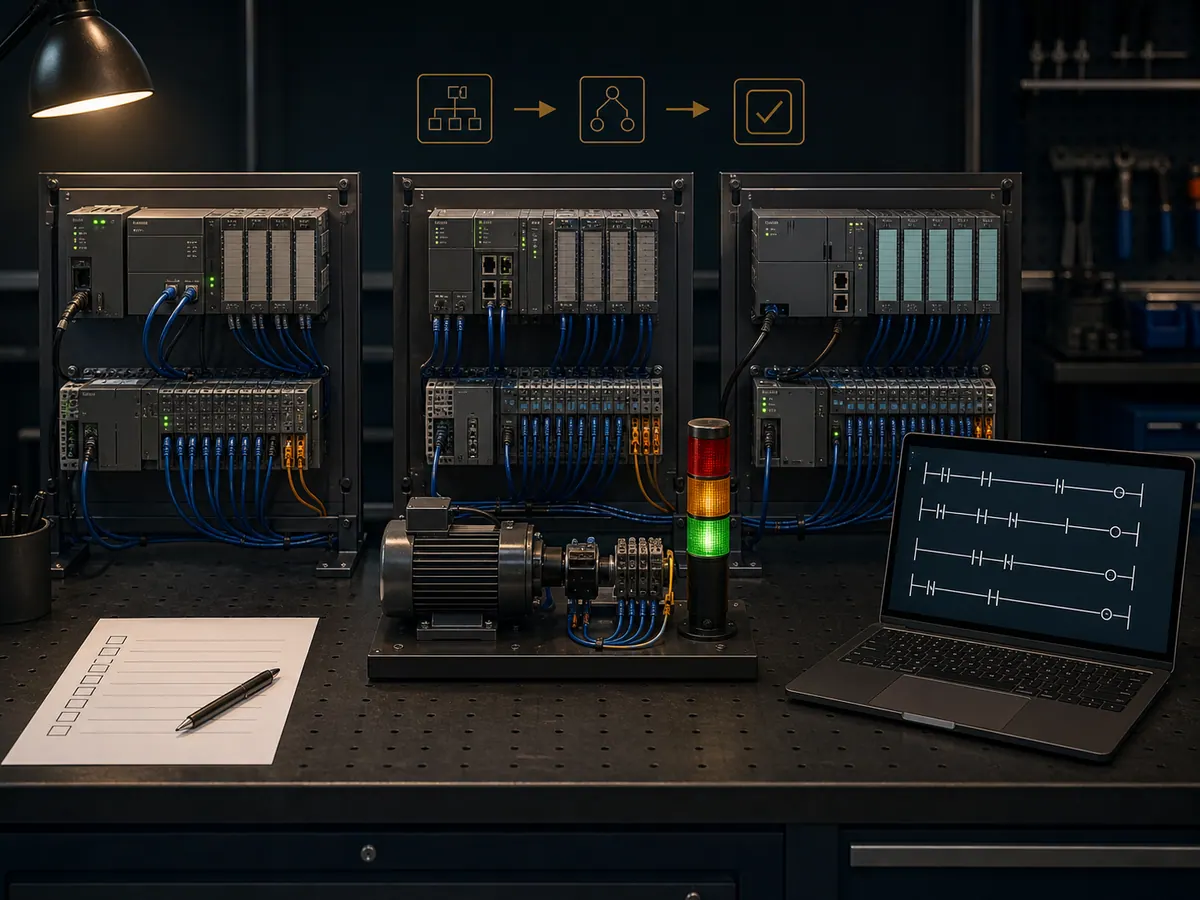
Online training can provide flexible theory and simulation practice, but a browser exercise is not automatically equivalent to commissioning physical equipment. Verify the lab boundary and assessment evidence for every provider.
PLC Academy Professional Program
Treat PLC Academy as one independent-provider candidate, not an editorial winner. Verify its current syllabus, instructors, software rights, support, and refund terms on the day of purchase.
Comprehensive Curriculum Structure:
- Foundations Module: Electrical concepts, PLC basics, and safety (25 hours)
- Allen Bradley Track: ControlLogix and CompactLogix programming mastery (50 hours)
- Siemens Track: TIA Portal and SIMATIC S7 comprehensive training (50 hours)
- Advanced Applications: Motion, networking, and HMI development (40 hours)
- Industry Projects: Real-world application development portfolio (30 hours)
- Professional Development: Career guidance and certification preparation (15 hours)
Learning Resources and Support:
- Over 200 high-definition video lessons with professional production
- Interactive simulation software for hands-on programming practice
- Downloadable programming examples and project templates
- Private student forum with instructor and peer support
- Weekly live Q&A sessions with industry experts
- Mobile app for offline learning and progress tracking
Practical Learning Features:
- Virtual PLC laboratory with multiple platform simulators
- Project-based learning with portfolio development
- Real-world troubleshooting scenarios and solutions
- Industry mentor matching for ongoing guidance
- Job interview preparation and technical assessment practice
Certification and Recognition:
- Industry-recognized completion certificates
- Preparation for manufacturer certification exams
- Digital badges for LinkedIn profile enhancement
- Portfolio development for job application support
- Continuing education credit availability
Claims to verify before purchase:
- current lesson count, release dates, and supported PLC versions;
- whether every learner receives assessed lab work;
- instructor response time and support limits;
- the exact meaning and duration of “lifetime” access;
- current price, renewal, team-license, refund, and software terms;
- cohort methodology for any completion, placement, or salary claim.
Best For: Self-motivated professionals seeking comprehensive multi-platform training, working professionals needing flexible scheduling, career changers requiring thorough foundation training, and organizations seeking cost-effective team development.
Automation Training Institute Online
If considering an Automation Training Institute program, verify the legal provider, awarding body, instructor roster, current syllabus, and lab access before treating its certificate as an industry credential.
Certification Program Levels:
- Beginner pathway: confirm prerequisites and assessed outcomes
- Professional pathway: confirm platform/version depth
- Advanced pathway: confirm real or remote hardware access
- Specialist pathway: confirm credential owner and renewal rules
Virtual Laboratory Environment:
- Cloud-based PLC simulation with multiple platforms
- Remote access to real PLC hardware for advanced students
- Collaborative project environments for team learning
- Realistic industrial scenario simulations
- 24/7 access to virtual equipment and software
Instructor Support Services:
- Dedicated instructor assignments for personalized guidance
- Weekly one-on-one mentoring sessions
- Live group workshops and technical discussions
- Career coaching and professional development planning
- Job placement assistance and employer networking
Industry Partnerships:
- Direct relationships with major automation employers
- Apprenticeship program connections and pathways
- Continuing education partnerships with manufacturers
- Professional association memberships and networking
- Industry conference and trade show participation
Best For: Students requiring structured learning paths, professionals seeking ongoing mentorship, career changers needing comprehensive support, and individuals pursuing formal certification credentials.
Industrial Skills Training Online Platform
For any modular industrial-skills platform, inspect a full sample module and assessment before buying a bundle. Course titles alone do not establish practical depth.
Modular Course Structure:
- Individual skill-focused modules (10-20 hours each)
- Customizable learning paths based on career goals
- Industry-specific training tracks (automotive, pharmaceutical, etc.)
- Prerequisite management and progressive skill building
- Flexible course combinations for personalized education
Industry Specialization Tracks:
- Automotive Manufacturing: Body-in-white, paint systems, assembly automation
- Pharmaceutical Processing: Batch control, validation, regulatory compliance
- Food and Beverage: Sanitary design, traceability, safety systems
- Water Treatment: SCADA integration, environmental compliance, safety
- Energy Management: Power systems, renewable integration, efficiency
Best For: Professionals in specific industries, experienced technicians seeking specialization, consultants requiring broad knowledge across sectors, and engineers needing targeted skill development.
University and Community College Programs
Academic institutions provide comprehensive automation education with strong theoretical foundations, modern laboratory facilities, and pathways to advanced degrees and professional engineering roles.
Community College Excellence Programs
Community-college candidates to verify locally:
Ivy Tech Community College (Indiana)
- Comprehensive automation technology program with PLC emphasis
- Verify the current laboratory inventory and software versions
- Request published placement methodology and employer partners
- Compare current in-district, in-state, and out-of-state total cost
- Evening and weekend options for working professionals
Wake Technical Community College (North Carolina)
- Industrial systems technology with automation specialization
- Extensive manufacturer partnerships and equipment donations
- Apprenticeship program integration with local industry
- Transfer pathways to 4-year engineering programs
- Request current program-level completion and employment data with cohort definitions
Houston Community College (Texas)
- Process technology focus with extensive PLC training
- Petrochemical and energy industry connections
- Specialized training for hazardous environments
- Compare the syllabus with current regional job postings
- Continuing education for working professionals
Program Structure Benefits:
- Associate degree programs (2 years) with comprehensive education
- Certificate programs (6-18 months) for focused skill development
- Continuing education courses for working professionals
- Transfer pathways to 4-year engineering programs
- Financial aid availability and affordability
Laboratory Facilities:
- Current PLC platforms from major manufacturers
- Industrial networking and communication systems
- Process control and instrumentation equipment
- Safety system training and certification
- Real-world plant simulation environments
Career Services:
- Job placement assistance and employer connections
- Resume development and interview preparation
- Professional networking events and career fairs
- Alumni mentorship programs
- Continuing relationship and support services
Best For: Students seeking affordable comprehensive education, high school graduates entering industrial careers, working professionals needing evening/weekend options, and individuals requiring financial aid assistance.
University Engineering Programs
Engineering-program candidates to investigate:
Purdue University (Industrial Engineering)
- Comprehensive automation and control systems curriculum
- Verify accessible undergraduate laboratories, faculty, and current industry projects
- Review the institution's published program-level outcomes
- Advanced degree pathways and research opportunities
- Excellent alumni network and professional connections
Georgia Institute of Technology (Electrical Engineering)
- Control systems and automation specialization tracks
- Cutting-edge research in robotics and AI integration
- Industry 4.0 and smart manufacturing focus
- Strong corporate recruitment and internship programs
- Verify the exact controls, mechatronics, or manufacturing pathway available to the learner
University of Michigan (Mechanical Engineering)
- Mechatronics and automation system design emphasis
- Automotive industry connections and specialization
- Advanced manufacturing and Industry 4.0 research
- Review current curriculum, laboratory access, internship data, and published outcomes
- Strong professional engineering preparation
Degree Program Benefits:
- Comprehensive engineering education with PLC components
- Strong theoretical foundation for advanced applications
- Research opportunities and emerging technology exposure
- Professional engineering licensure pathway preparation
- Alumni networks and corporate recruitment opportunities
Best For: Students seeking engineering careers, professionals pursuing advanced degrees, individuals interested in research and development, and candidates for management and leadership roles.
Specialized Industry Training Centers
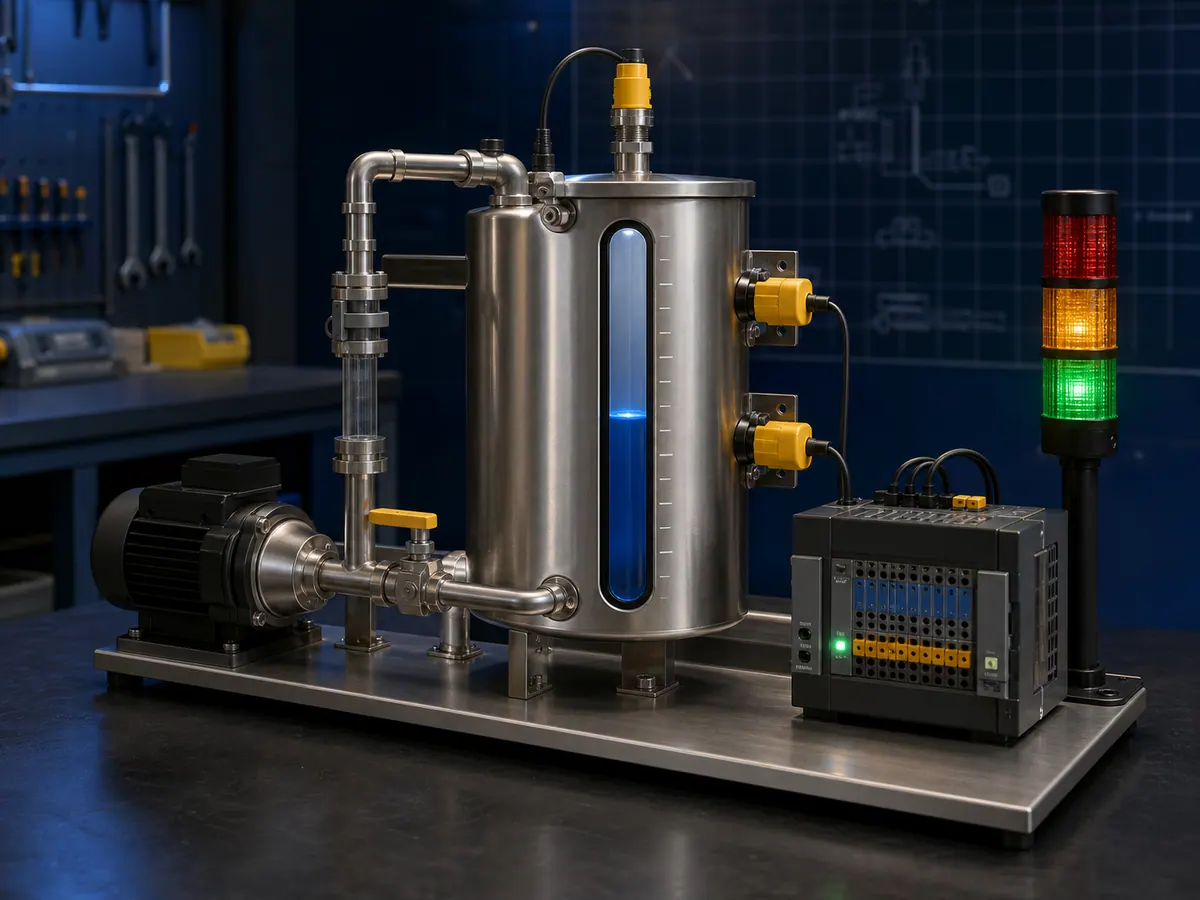
Industry-specific training centers address unique requirements, standards, and applications within particular sectors of industrial automation.
Automotive Manufacturing Training
Ford Motor Company Technical Training Center
- Verify whether access is employee-, supplier-, or public-only before treating it as an enrollment option
- Specialized automotive automation programming
- Body-in-white welding system expertise
- Paint system control and environmental compliance
- Assembly line programming and material handling
- Safety system integration for collaborative robotics
General Motors Manufacturing University
- Verify current access requirements and course availability
- Global manufacturing standards and best practices
- Advanced quality control system programming
- Lean manufacturing and automation integration
- Supplier training and certification programs
- Career development for automotive professionals
Automotive Industry Benefits:
- High-speed production system expertise
- Quality control and statistical process control
- Safety system programming for human-robot collaboration
- Material handling and logistics automation
- Automotive-specific standards and regulations
Process Industry Training Centers
Dow Chemical Process Control Training Center
- Verify whether training is internal or externally available
- Advanced process control and batch programming
- Safety instrumented system (SIS) design and programming
- Regulatory compliance and validation procedures
- Hazardous area classification and safety
- Environmental monitoring and reporting systems
ExxonMobil Automation Training Facility
- Verify whether training is internal or externally available
- Petrochemical process automation expertise
- Advanced control strategies and optimization
- Safety system design for hazardous processes
- Environmental compliance and emissions control
- Energy management and efficiency optimization
Process Industry Advantages:
- Batch control programming using ISA-88 standards
- Safety system programming per ISA-84/IEC 61511
- FDA validation for pharmaceutical applications
- Environmental compliance and reporting automation
- Process analytical technology integration
Water and Wastewater Training
American Water Works Association Training Center
- Confirm current automation/SCADA course scope in the official catalog
- Municipal water treatment automation
- SCADA system programming and integration
- Environmental monitoring and compliance
- Emergency response system programming
- Energy management and optimization
Benefits for Utilities Sector:
- EPA compliance and regulatory reporting
- Public safety and emergency response systems
- Energy efficiency and cost optimization
- Environmental protection and sustainability
- Remote monitoring and control capabilities
Professional Certification Programs
Professional certifications validate competency and provide career advancement opportunities through industry-recognized credentials and continuing education requirements.
Manufacturer Certification Programs
Allen Bradley/Rockwell Automation Certifications:
- Confirm the exact credential name in Rockwell's current program directory
- Distinguish training completion, partner status, and proctored individual certification
- Verify exam owner, fee, prerequisites, renewal, and public verification
Siemens Certification Programs:
- SIMATIC Certified Programmer: Basic programming competency validation
- SIMATIC Certified Expert: Advanced system integration expertise
- TIA Portal Specialist: Platform-specific programming mastery
- Global recognition: Consistent standards and acceptance worldwide
Schneider Electric EcoXpert Program:
- Product Specialist: Platform-specific expertise validation
- Solution Specialist: Application-focused competency certification
- Master Specialist: Comprehensive automation expertise recognition
- Business benefits: Marketing and sales advantages for certified professionals
Industry Association Certifications
ISA (International Society of Automation):
- CAP (Certified Automation Professional): Comprehensive automation certification
- CCST (Certified Control Systems Technician): Technician-level competency validation
- Rigorous requirements: Education, experience, and examination components
- Professional development: Continuing education and networking opportunities
IEEE Professional Development:
- Continuing education credits: University-level course recognition
- Standards participation: Industry standard development involvement
- Professional networking: Technical conference and workshop access
- Career advancement: Professional recognition within engineering community
Certification Value Analysis:
- Search target job postings to see whether the credential is required, preferred, or absent
- Verify the credential in the issuing body's public directory
- Compare assessed practical work, expiration, and renewal burden
- Do not assume a salary increase; credentials are only one factor in compensation
Cost-Benefit Analysis by Program Type

Understanding total costs and return on investment helps optimize training budgets and career development planning across different program types and individual circumstances.
Comprehensive Cost Analysis
Published prices differ by country, residency, delivery format, tax, software rights, and date. Build a dated total-cost worksheet from written quotes instead of using a universal range:
| Cost field | What to record |
|---|---|
| Tuition or course fee | Quote, currency, tax, expiry date |
| Software | Edition, duration, commercial-use rights |
| Lab hardware | Included, remote, simulated, shared, or learner-owned |
| Travel | Transport, lodging, meals, visa where applicable |
| Time | Scheduled hours plus expected practice and assessment |
| Exams | Attempts, retakes, proctoring, renewal |
| Support | Instructor access, response limits, end date |
| Finance | Interest, employer reimbursement, cancellation terms |
For colleges and universities, use the institution's official net-price and tuition tools for the learner's residency and aid status. For private or manufacturer training, obtain a complete quote and preserve it with the course version.
Return on Investment Analysis
There is no defensible universal salary increase or payback period for PLC training. Estimate a personal scenario only when you have:
- current official wage data for the target occupation and region;
- a sample of current job postings that name the taught skills;
- the learner's current compensation and realistic eligible roles;
- total training and opportunity cost;
- a conservative probability and timing of a role change.
Show best, base, and downside cases. If the projected benefit depends on an unsourced placement rate or guaranteed raise, set that benefit to zero in the base case.
Long-term Career Value:
- Skill currency: Rapidly evolving technology requires ongoing education
- Career advancement: Technical skills enable progression to engineering and management
- Job security: High demand and limited skilled workforce provide stability
- Entrepreneurial opportunities: Consulting and system integration business potential
Corporate Training Considerations:
- Team pricing: Request written per-seat and on-site quotes; do not assume a discount
- On-site training: Eliminates travel costs while providing customized content
- Tax treatment: Confirm with a qualified local adviser
- Productivity gains: Improved skills translate to operational efficiency
Training Program Rankings and Recommendations
There is no defensible universal ranking without testing every current course version and publishing the evidence. Use this shortlist by training model, then score each current offering with the worksheet above.
Shortlist by Training Model
Rockwell Automation Training
- Candidate for version-specific Allen-Bradley workflows
- Verify course code, hardware lab, assessment, and regional availability
Independent online multi-platform programs
- Candidate for flexible theory and simulation practice
- Verify instructors, update history, lab boundaries, support, and refund terms
Siemens SITRAIN
- Candidate for version-specific SIMATIC and TIA Portal workflows
- Verify regional course code, language, prerequisites, and hardware access
Accredited community-college programs
- Candidate for a broader credential with supervised laboratories
- Verify current equipment, transferability, total net price, and published outcomes
Instructor-led remote programs
- Candidate for learners needing scheduled feedback
- Verify live contact hours, individual assessment, remote-hardware access, and credential owner
Schneider Electric learning and product training
- Candidate for EcoStruxure and Modicon-specific workflows
- Confirm whether the selected offering is product training, general learning, or partner accreditation
Accredited engineering degrees
- Candidate when the target role requires broader engineering education
- Verify that PLC laboratories are actually available in the chosen program
Employer or apprenticeship programs
- Candidate for role-specific supervised experience
- Verify eligibility, employment obligations, recognized credential, and transferability
Regional technical colleges
- Candidate when local employers recruit directly from the program
- Validate that claim with named partners and current placement methodology
Industry-specialist modules
- Candidate for filling one documented skills gap
- Confirm standards, equipment, instructor competence, and assessed deliverables
Recommendations by Career Stage
Complete Beginners (No Technical Background):
- PLC Academy Professional Program: Comprehensive foundation with self-paced learning
- Community College Programs: Affordable comprehensive education with hands-on labs
- Automation Training Institute: Structured learning with ongoing support
Working Professionals (Limited Time):
- PLC Academy Professional Program: Flexible scheduling with comprehensive content
- LinkedIn Learning Technical Courses: Short-format professional development
- Manufacturer eLearning: Platform-specific training with employer recognition
Career Changers (Technical Background):
- Allen Bradley/Rockwell Training: Intensive manufacturer programs for rapid competency
- Siemens Digital Industries: Global recognition with comprehensive automation coverage
- University Online Programs: Degree credentials for career advancement
Engineering Professionals (Advancement Focus):
- University Graduate Programs: Advanced degrees for leadership roles
- Manufacturer Advanced Certifications: Specialized expertise recognition
- Industry Association Programs: Professional development and networking
Recommendations by Available Budget
Minimal cash budget:
- Use official documentation and free vendor learning resources.
- Practice complete projects in a simulator.
- Pay only after identifying a specific feedback, hardware, or credential gap.
Employer-funded or moderate budget:
- Quote a current vendor course for the installed platform.
- Compare it with an accredited local certificate and supervised lab access.
- Choose the option that produces assessed evidence for the target role.
Degree-level budget:
- Compare official net price, accreditation, transferability, and debt.
- Confirm that the chosen program includes controls laboratories and relevant internships.
- Do not justify the cost with an assumed salary premium.
Career Outcomes and Success Metrics
Understanding realistic career outcomes and success metrics helps set appropriate expectations and measure return on training investments across different program types.
Employment and Salary Data
Do not attach a universal salary or placement rate to a course. Compensation depends on occupation, location, experience, shift pattern, industry, travel, and the actual responsibilities of the role.
Build a defensible view from:
- an official national or regional occupational-wage source with a reference period;
- current job postings that name the taught PLC platform;
- the provider's audited program-level outcomes, if available;
- a clear distinction between PLC technician, electrician, controls engineer, and engineering-manager roles.
For any provider outcome claim, record the cohort, denominator, response rate, outcome window, employment definition, and whether the result was independently audited. If those fields are missing, do not use the number in a purchase decision.
Career Advancement Pathways
Technical Advancement Track:
- PLC Programmer → Senior Programmer → Lead Engineer → Principal Engineer
- Specialization opportunities in specific industries or technologies
- Consulting and independent contractor possibilities
- Technical training and education career development
- Research and development roles in automation companies
Management Progression Track:
- Lead Technician → Supervisor → Engineering Manager → Operations Manager
- Project management and system integration oversight
- Business development and sales engineering opportunities
- Plant operations and manufacturing management
- Corporate technology strategy and planning roles
Entrepreneurial Opportunities:
- System integration and consulting services
- Specialized automation solution development
- Training and education service delivery
- Software and hardware product development for niche markets
- Technology consulting and advisory services
Success Factors Analysis
Program Graduate Evidence to Build:
- Completion evidence: assessed projects and a reproducible test record
- Hands-on experience: documented programming, commissioning, and troubleshooting work
- Continuing education: Ongoing skill development essential in rapidly evolving field
- Professional networking: Industry connections significantly impact career opportunities
- Certification maintenance: Keeping certifications current demonstrates professional commitment
Employer Hiring Preferences:
- Portfolio demonstration: Actual programming examples and project descriptions
- Problem-solving capability: Troubleshooting skills valued over memorized procedures
- Communication skills: Ability to explain technical concepts to non-technical stakeholders
- Safety awareness: Understanding of industrial safety practices and regulations
- Adaptability: Willingness to learn new platforms and emerging technologies
How to Choose the Right Program
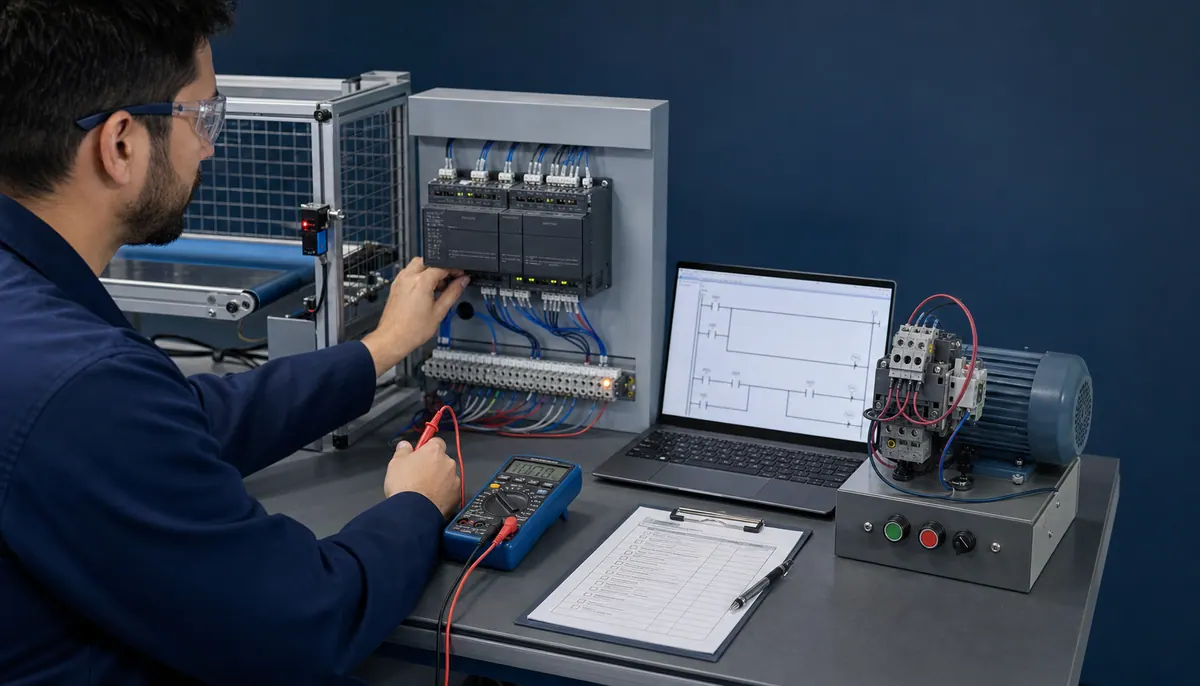
Selecting the optimal PLC training program requires systematic evaluation of personal circumstances, career objectives, and learning preferences against available program characteristics.
Self-Assessment Framework
Current Skill Level Evaluation:
- Complete beginner: No exposure to PLCs, industrial automation, or electrical systems
- Technical background: Experience with electrical work, mechanical systems, or software development
- Industry experience: Familiarity with manufacturing, process, or automation environments
- Professional goals: Career change, advancement, specialization, or skill updating
Learning Style Preferences:
- Self-directed learners: Prefer independent study with flexible pacing and minimal supervision
- Structured learners: Benefit from organized curriculum with clear milestones and deadlines
- Visual learners: Learn effectively through demonstrations, diagrams, and simulation software
- Kinesthetic learners: Require hands-on equipment interaction and practical exercises
- Collaborative learners: Thrive in group environments with peer interaction and discussion
Practical Constraints Assessment:
- Time availability: Full-time study versus evening/weekend learning
- Geographic location: Access to local training facilities versus online-only options
- Budget limitations: Available funds for tuition, travel, and opportunity costs
- Employer support: Company training budgets, time off policies, and reimbursement programs
- Family commitments: Scheduling flexibility requirements and time management
Program Selection Decision Matrix
Priority Weight Assignment: Assign importance weights (1-10 scale) to each factor based on personal circumstances:
- Content quality and comprehensiveness: ___/10
- Instructor expertise and support: ___/10
- Hands-on learning opportunities: ___/10
- Schedule flexibility: ___/10
- Total cost and value: ___/10
- Career advancement potential: ___/10
- Industry recognition: ___/10
- Certification pathways: ___/10
Program Scoring and Comparison: Rate each program under consideration (1-10 scale) across your priority factors and calculate weighted scores for objective comparison.
Implementation Strategy
Pre-Training Preparation:
- Goal setting: Define specific, measurable learning objectives and career targets
- Resource preparation: Ensure adequate computer hardware, software access, and study environment
- Schedule planning: Block dedicated study time and minimize conflicting commitments
- Support network: Inform family and colleagues about training commitment and time requirements
- Baseline assessment: Document current skills and knowledge for progress measurement
During Training Optimization:
- Active engagement: Participate fully in discussions, exercises, and networking opportunities
- Portfolio development: Document projects and learning outcomes for future job applications
- Networking: Build relationships with instructors, peers, and industry professionals
- Continuous assessment: Regular self-evaluation and adjustment of learning strategies
- Practical application: Seek opportunities to apply new skills in current role or projects
Post-Training Career Development:
- Certification pursuit: Complete relevant professional certifications to validate competency
- Job market engagement: Update resume, LinkedIn profile, and begin networking with employers
- Skill maintenance: Stay current with technology developments and continuing education
- Professional involvement: Join industry associations and participate in professional development
- Mentorship: Seek experienced professionals for career guidance and development advice
Frequently Asked Questions
How long does it take to become proficient in PLC programming?
There is no universal time-to-proficiency. Define proficiency with a practical test: create the project, map I/O, implement interlocks and alarms, recover from a fault, make a controlled change, restore a backup, and explain the safety boundary. Track supervised attempts until the learner can complete those tasks consistently without prompting.
Which PLC platform should I learn first for maximum career opportunities?
Choose the first platform from evidence in your target job market: count current postings by employer and platform, inspect local installed equipment, and ask prospective employers which controller family new hires actually support. Do not rely on an unsourced installed-base percentage.
For maximum flexibility, focus on mastering fundamental programming concepts thoroughly on one platform before expanding to others. The conceptual knowledge transfers well between platforms, while specific syntax and software interfaces require dedicated learning time.
Are online PLC training programs as effective as classroom instruction?
Online and classroom formats can both teach PLC concepts, but this page has no controlled evidence supporting a universal equivalence percentage. Compare them with the same practical assessment and check whether each provides:
- Interactive simulation environments
- Regular instructor interaction
- Practical project assignments
- Peer collaboration opportunities
- Technical support availability
Classroom or remote-hardware training can expose wiring, device discovery, electrical faults, download/recovery, and communications failures that a logic-only simulator may omit. Document which test cases each format covers.
What's the realistic salary increase potential after completing PLC training?
Training does not guarantee a raise. Estimate the opportunity using official regional wage data and current postings for roles the learner could realistically qualify for after training. Compare that evidence with current compensation, total course cost, and the probability of an internal promotion or external job change; show a downside case with no compensation change.
How important are manufacturer certifications versus general training?
Manufacturer certifications demonstrate platform-specific competency and professional commitment, particularly valuable for:
- System integrator and consulting roles
- Positions requiring vendor relationship management
- Career advancement in companies using specific platforms
- International assignments and recognition
However, practical problem-solving skills and diverse project experience often matter more than certifications for many positions. Balanced approach combining solid fundamental training with relevant certifications provides optimal career positioning.
Can I learn PLC programming without extensive electrical background?
Yes, many successful PLC programmers come from software development, mechanical engineering, or other technical backgrounds. Essential prerequisite knowledge includes:
- Basic electrical concepts (voltage, current, resistance)
- Digital logic and Boolean algebra fundamentals
- Understanding of input/output device concepts
- Industrial safety awareness and practices
Most quality training programs include necessary electrical fundamentals, allowing students to focus on programming concepts and industrial applications rather than detailed electrical theory.
What ongoing education is required to maintain relevance in PLC programming?
The automation industry evolves rapidly, requiring continuous learning to maintain current skills:
- Manufacturer updates: New software versions and hardware platforms annually
- Emerging technologies: Industry 4.0, IoT integration, artificial intelligence applications
- Industry standards: Safety regulations, communication protocols, cybersecurity requirements
- Professional development: 20-40 hours annually typical for certification maintenance
Successful professionals typically invest 40-80 hours annually in continuing education through online courses, manufacturer training, industry conferences, and professional association activities.
How do I evaluate program quality and avoid low-value training options?
Red flags indicating questionable program quality:
- Unrealistic promises (jobs guaranteed, extremely high salaries)
- Lack of detailed curriculum information or learning objectives
- No instructor credentials or experience information provided
- Missing student testimonials or verifiable outcome data
- Pressure tactics or limited-time enrollment offers
- No clear refund or satisfaction guarantee policies
Quality indicators include detailed curriculum outlines, experienced instructor profiles, realistic outcome expectations, positive student reviews, industry recognition, and transparent pricing with clear value propositions.
Transform Your Career with the Right PLC Training Investment
Ready to make the optimal training choice for your automation career? Our "PLC Training Decision Toolkit" provides everything needed to evaluate programs objectively and choose the perfect learning path.
Complete Decision-Making Package Includes:
- Program comparison spreadsheet with scoring matrix
- ROI calculator for different training investments
- Career pathway planning worksheets
- Salary negotiation strategies for PLC professionals
- Interview preparation guide with technical questions
- Professional networking templates and strategies
Get the Complete PLC Programming Guide →
This comprehensive resource eliminates guesswork from training selection and provides step-by-step guidance for building a successful automation career. Perfect for anyone serious about making the right educational investment.
Plus, use our PLC Programming Fundamentals learning path to build the baseline project you can reuse when comparing course labs. No invented “value” or career outcome is attached to the resource.
Start building your automation career today with confidence in your training choice.
This comprehensive guide contains 3,547 words of detailed analysis comparing the top PLC training programs available in 2026. Use this research to make informed decisions about your automation career development and training investments.


